- November 12, 2026
- By: aahadmin
- in: Uncategorized

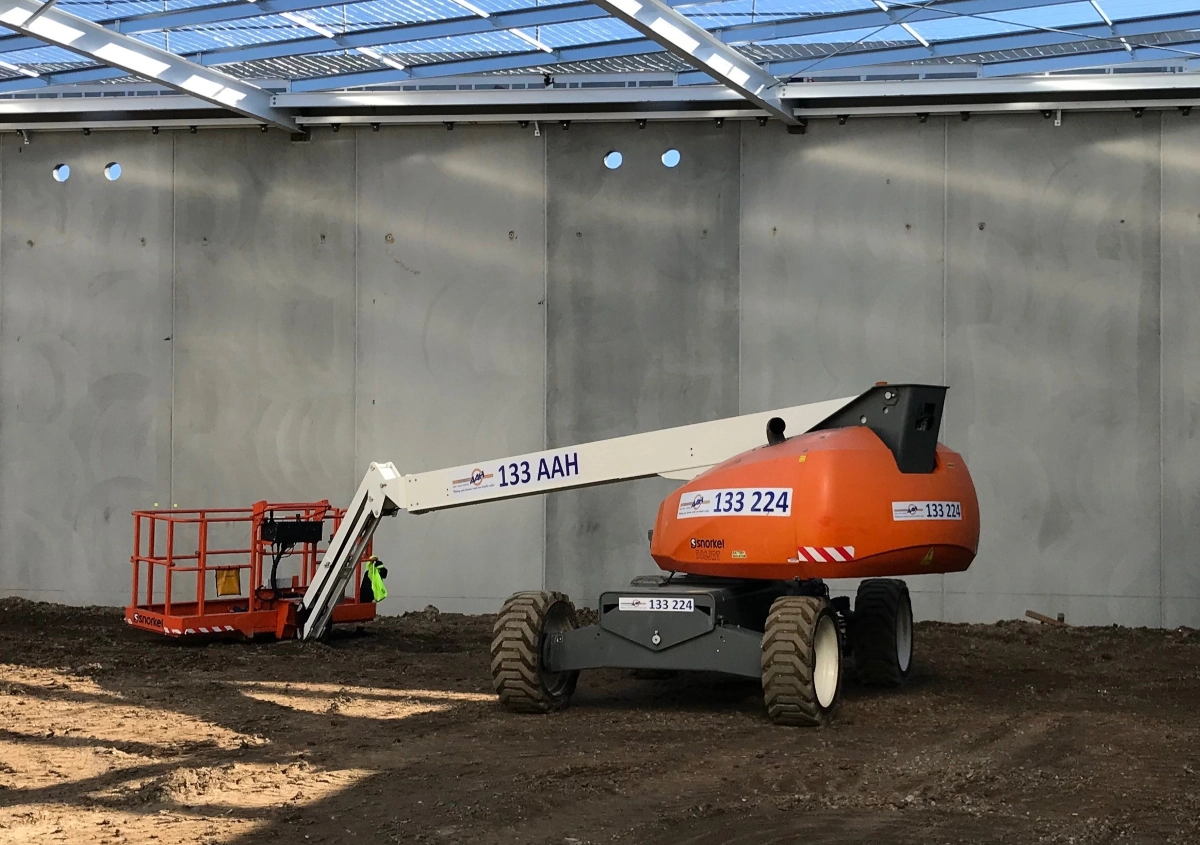
Working at height is a regular part of many construction, maintenance and installation projects. Whether you’re installing services, carrying out building maintenance or working on a large construction site, choosing the right elevated work platform (EWP) can make a significant difference to the safety and efficiency of the job.
However, not all elevated work platforms are designed for the same applications. Factors such as working height, horizontal reach, ground conditions and site access all need to be considered before arranging equipment hire.
Here’s what to think about when choosing an EWP for your next project.
One of the first decisions is whether your project requires a boom lift or a scissor lift. While both provide elevated access, they are designed for different types of work.
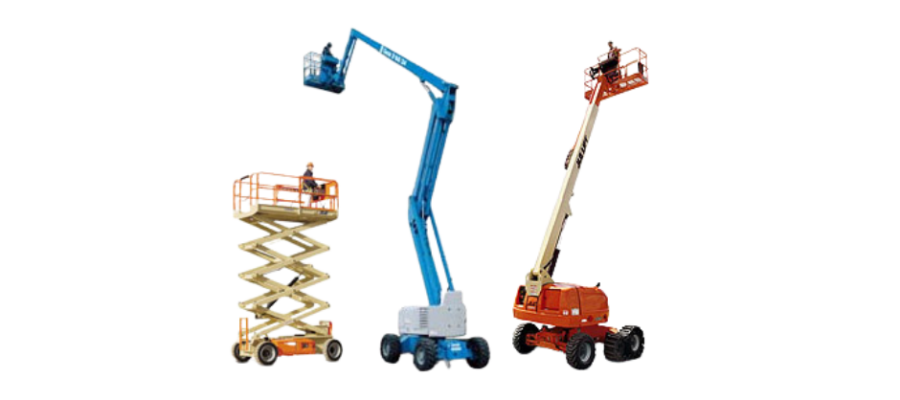
Boom lifts are designed to provide both vertical elevation and horizontal reach. Their extending and articulating booms allow operators to access areas that may be difficult to reach directly from underneath. This makes them particularly useful for construction, building maintenance, installation work and projects where obstacles need to be worked around.
Scissor lifts, on the other hand, provide primarily vertical elevation. Their platform rises and lowers in a straight line, offering a stable working area with room for operators, tools and materials. They are commonly used for indoor construction, electrical work, warehouse maintenance and other tasks where workers need to operate directly above the machine.
The right choice depends on the working position required and the layout of your site.
Before hiring an EWP, establish how high your workers need to reach and whether they need to access areas horizontally away from the machine.
It’s important to understand the difference between platform height and working height. Working height is generally calculated by adding approximately two metres to the platform height, representing the average standing reach of an operator.
For boom lifts, horizontal outreach is another important consideration. If workers need to reach over structures, machinery or other obstacles, a machine with suitable horizontal reach may be necessary.
Choosing a machine with insufficient reach can make the job difficult, while hiring a significantly larger machine than required may add unnecessary expense.
Ground conditions play an important role in determining which EWP is suitable for your project.
For indoor applications, a compact electric scissor lift may be ideal. These machines are generally suited to smooth, level surfaces and offer the advantage of quiet, emission-free operation.
Outdoor construction sites may require a diesel-powered boom lift or rough-terrain scissor lift, particularly where the ground is uneven or access conditions are more demanding.
You should also consider:
Whether the ground is firm, stable and capable of supporting the machine.
Slopes, gradients and uneven surfaces.
Available access routes and turning space.
Overhead obstructions, powerlines and nearby structures.
Whether the machine needs to travel across different areas of the site.
Providing accurate information about your site conditions when arranging hire helps ensure the right equipment is supplied.
The size of the EWP is just as important as its working height. A machine may have the required reach but still be unsuitable if it cannot fit through the site entrance or manoeuvre into the working area.
Consider the width and height of access points, available turning space and any restrictions around the work area.
For indoor projects, compact electric models can be particularly useful in warehouses, factories and commercial buildings where space is limited. For larger outdoor projects, bigger boom lifts may provide the additional reach and capability required.
It’s also worth considering where the machine will be positioned during the job and whether it needs to move between multiple work areas.
Different jobs place different demands on an elevated work platform.
For example, electrical installation and warehouse maintenance may only require a compact scissor lift with vertical access. Building construction, steel installation and exterior maintenance may benefit from the additional outreach provided by a boom lift.
You should also consider how many workers will be using the platform and whether tools or materials need to be carried at height. Every EWP has a rated platform capacity, so the combined weight of workers, tools and materials must remain within the manufacturer’s limits.
If you’re unsure which type of machine is best suited to your application, discussing the job requirements with your equipment hire provider can help narrow down the options.
Operating an elevated work platform requires appropriate training and competency. In Australia, high-risk work licensing requirements apply to boom-type EWPs with a boom length of 11 metres or more. Other EWP operations also require suitable training and competency in accordance with applicable workplace safety requirements.
Before hiring, make sure you understand the operator requirements for the machine and the work being undertaken.
Operators should also be familiar with the machine’s operating instructions, safety systems, emergency lowering procedures and any site-specific requirements. A suitable risk assessment should be completed before work begins, taking into account ground conditions, overhead hazards and the surrounding work environment.
Choosing the right elevated work platform doesn’t need to be complicated, but it’s important to consider more than just the maximum working height.
By assessing your site conditions, required reach, access restrictions and the type of work being performed, you can select equipment that is better suited to the job.
Australian Access Hire offers a range of elevated work platforms for construction, maintenance, installation and industrial applications. With equipment from established manufacturers including JLG and Genie, we can help you find a suitable machine for your project.
Whether you need a scissor lift for straightforward vertical access or a boom lift for more challenging applications, contact Australian Access Hire to discuss your requirements and arrange equipment hire.
A straight boom lift, also known as a telescopic boom lift, extends outwards in a straight line to provide maximum horizontal reach. It is particularly useful for accessing elevated work areas across open spaces or where workers need to reach a specific position from a distance.
A knuckle boom lift, also called an articulating boom lift, has multiple sections with pivoting joints. This allows the boom to bend and manoeuvre around obstacles, making it better suited to working in confined areas or accessing difficult positions around buildings and structures.
It depends on the type of access your project requires. Scissor lifts provide vertical elevation and a larger platform area, making them suitable for work directly above the machine. Boom lifts offer greater horizontal reach, allowing operators to access areas that may be difficult to reach from directly underneath.
In Australia, a high-risk work licence is required to operate a boom-type elevated work platform with a boom length of 11 metres or more. For other EWP types, operators still need appropriate training and competency for the equipment and task. Workplace safety requirements should also be checked before operation.
Yes, certain EWPs are designed for outdoor and rough-terrain applications. Diesel boom lifts and rough-terrain scissor lifts are commonly used on construction sites where ground conditions may be less than ideal. However, the machine must be suitable for the terrain, and the ground must be assessed for stability and load-bearing capacity before use.
When requesting an EWP hire, it’s helpful to provide the required working height, horizontal reach (if applicable), site location, ground conditions and access restrictions. You should also explain the type of work being performed and whether operators need to carry tools or materials on the platform. This information helps your hire provider recommend a machine suited to your project.

Since 2006, Australian Access Hire (AAH) has been Australia’s trusted partner for access equipment hire and rental. With branches in Sydney, Brisbane, Melbourne, and Perth, we deliver safe, reliable, and premium-brand solutions for every project.
CALL OUR TEAM
133 224