- October 16, 2026
- By: aahadmin
- in: Uncategorized

Choosing the right forklift for your project can make a significant difference to productivity, safety and how efficiently materials are moved around your site. However, not all forklifts are designed for the same working conditions.
A standard warehouse forklift is built for handling materials on firm, relatively level surfaces, while an all-terrain forklift is designed to work in more challenging outdoor environments. Choosing the right machine depends on where you will be operating, what you need to lift and the conditions you need to work in.
In this guide, we explain the key differences between warehouse and all-terrain forklifts to help you decide which type is right for your job.
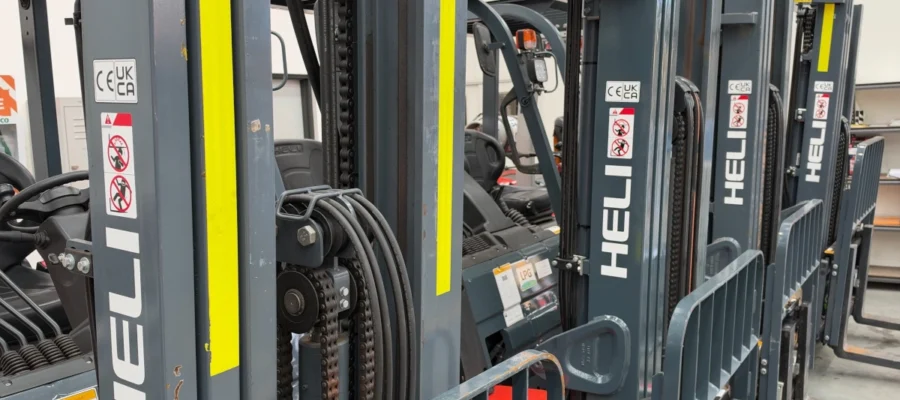
A warehouse forklift is designed primarily for indoor material handling and use on firm, relatively smooth surfaces. These machines are commonly found in distribution centres, warehouses, manufacturing facilities and storage yards.
Electric forklifts are particularly popular in indoor environments because they produce no exhaust emissions at the point of use and generally operate more quietly than diesel-powered alternatives. Depending on the application, LPG and diesel forklifts may also be suitable for outdoor yards and well-ventilated work areas.
Warehouse forklifts are commonly used for:
Their compact designs can make them suitable for working in confined areas, particularly where manoeuvrability and aisle width are important considerations.
However, standard warehouse forklifts are generally not the best choice for soft ground, muddy worksites or significantly uneven surfaces. Operating conditions should always be checked against the machine’s capabilities.
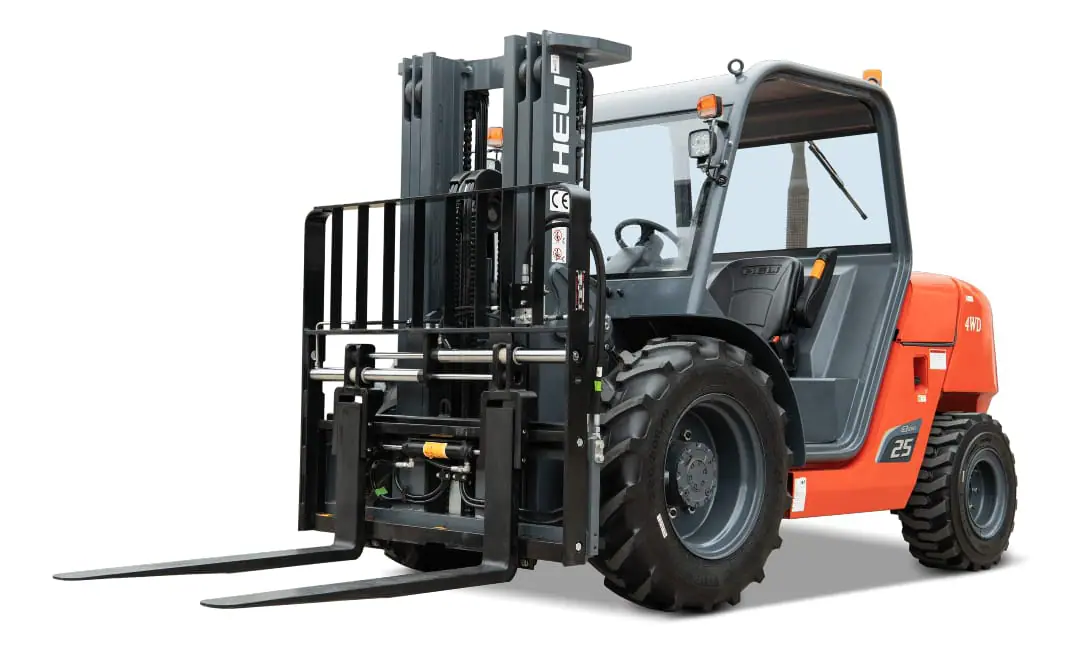
An all-terrain forklift is designed for material handling in outdoor environments where ground conditions may be more challenging. These machines are commonly used on construction sites, rural properties, industrial yards and other locations where standard warehouse forklifts may struggle.
Depending on the model, all-terrain forklifts may feature larger tyres, increased ground clearance and a chassis designed to handle rougher surfaces. Many are diesel-powered, making them suitable for outdoor applications where extended operation and access to charging facilities may be concerns.
Typical applications include:
Although all-terrain forklifts are designed for more demanding surfaces, they are not suitable for every ground condition. Deep mud, steep slopes, loose surfaces and unstable ground can still create hazards. The machine must be appropriate for the site and the task.
While both types of forklift perform similar material-handling tasks, their designs and intended operating environments differ.
Ground conditions are one of the most important factors when choosing a forklift.
Warehouse forklifts are best suited to firm, relatively smooth surfaces such as concrete warehouse floors and sealed loading areas. Uneven surfaces can affect stability and make material handling more difficult.
All-terrain forklifts are designed for rougher outdoor environments, including suitable gravel surfaces, compacted earth and construction sites. Their tyres, ground clearance and overall design can provide better performance in these conditions.
Before hiring, consider whether the machine will operate on concrete, asphalt, gravel, compacted soil or other surfaces. Also assess slopes, drainage, soft ground and any changes in elevation.
The weight of the load is another critical consideration, but rated capacity alone does not determine which forklift you need.
Both warehouse and all-terrain forklifts are available in different capacities. The appropriate machine depends on the load’s weight and dimensions, its centre of gravity, the required lifting height and the operating conditions.
Attachments can also affect a forklift’s rated capacity. If you need to handle unusually long, bulky or awkward materials, provide those details when arranging your hire.
Always check the manufacturer’s load chart and ensure the machine is suitable for the intended task.
Warehouse forklifts are often designed with compact dimensions to help operators work efficiently in confined spaces. This can be particularly important in warehouses with narrow aisles, closely spaced racks and busy loading areas.
All-terrain forklifts may have larger dimensions and turning requirements, depending on the model. They can be better suited to open outdoor areas where ground clearance and traction are more important than navigating tight aisles.
Measure your available working space and consider doorways, access routes, turning areas and any restrictions around the loading zone before choosing a machine.
Electric forklifts are often well suited to indoor operations because they produce no exhaust emissions at the point of use. They can be a practical choice for warehouses and facilities where air quality, noise and indoor working conditions are important.
Diesel forklifts are commonly used for outdoor material handling, including applications that require sustained operation away from charging facilities. However, diesel equipment produces exhaust emissions and must be used in accordance with appropriate ventilation and workplace safety requirements.
The right power source depends on where the forklift will operate, how frequently it will be used and the facilities available at your site.
Tyre selection plays an important role in forklift performance.
Warehouse forklifts commonly use tyres suited to smooth industrial floors. The specific tyre type will depend on the machine and the operating environment.
All-terrain forklifts generally use tyres designed to provide traction on more challenging outdoor surfaces. However, tyre design alone does not make a machine suitable for every surface or weather condition.
If your site has loose gravel, damp ground, compacted soil or changing surface conditions, explain these requirements when discussing your hire options.
The simplest way to narrow down your options is to consider the environment in which the forklift will spend most of its time.
A warehouse forklift may be the right choice if you need to move pallets inside a distribution centre, load goods on a smooth loading dock or transport materials around a manufacturing facility.
An all-terrain forklift may be more appropriate if you need to move building materials across a construction site, handle supplies on a rural property or work in an outdoor yard with uneven surfaces.
Some projects involve both indoor and outdoor work. In these situations, consider the most demanding operating conditions, the available access routes and whether one machine can safely handle the full range of tasks.
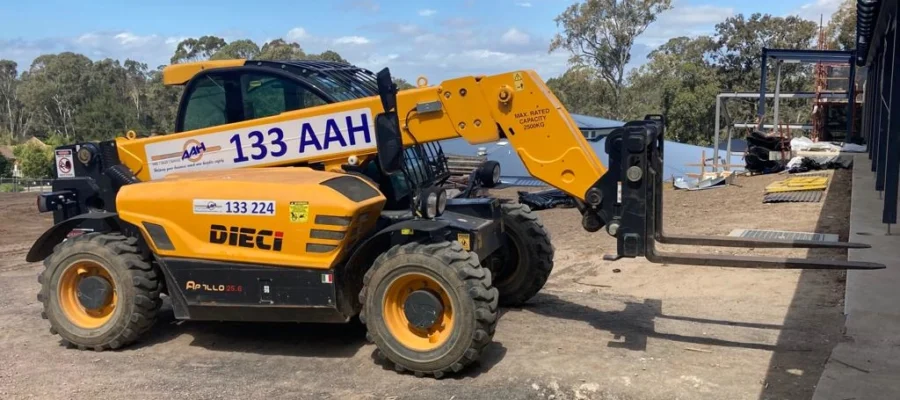
If neither type fully meets your requirements, another machine, such as a telehandler, may be worth considering depending on the load, required reach and site conditions.
Before arranging a forklift hire, gather a few key details about your job. This helps ensure the machine is appropriate for your requirements and reduces the risk of hiring equipment that cannot complete the task.
Consider the following:
Providing this information when requesting a quote allows the hire provider to assess your needs and recommend suitable equipment.
Choosing between a warehouse forklift and an all-terrain forklift comes down to your load requirements, working environment and site conditions. A warehouse machine may be ideal for smooth indoor operations, while an all-terrain model can provide the capability needed for suitable outdoor worksites.
Australian Access Hire supplies material-handling equipment for a range of industries and project requirements. If you are unsure which forklift is right for your job, contact AAH to discuss your application, site conditions and lifting requirements.
With the right machine selected for the task, you can move materials more efficiently and keep your project running smoothly.
A warehouse forklift may be suitable for certain construction site tasks if the ground is firm, level and appropriate for the machine. However, uneven terrain, loose gravel and soft ground can affect stability and traction. For more challenging outdoor conditions, an all-terrain forklift may be a better option.
Some all-terrain forklifts may be used indoors if the building has suitable access, floor capacity, ventilation and operating space. However, larger dimensions and diesel exhaust emissions can make them less suitable for enclosed warehouses. The machine should be selected according to the working environment and site requirements.
Consider the weight and dimensions of your load, its centre of gravity, the required lifting height and any attachments being used. A forklift’s rated capacity can decrease depending on the load position and lifting configuration. If you are unsure which capacity you need, AAH can help you assess your requirements.
Gas forklifts are often suitable for warehouse operations and mixed indoor-outdoor use where adequate ventilation is available. Diesel forklifts are generally better suited to outdoor applications, including construction sites, industrial yards and demanding material-handling tasks. The right choice depends on your working environment, load requirements and site conditions. If you’re unsure which option is best for your project, AAH can help you choose a suitable forklift.
AAH can arrange delivery of hired equipment to your worksite and collection at the end of the hire period. When requesting a quote, provide your site location, required hire dates and any access restrictions so transport arrangements can be assessed.

Since 2006, Australian Access Hire (AAH) has been Australia’s trusted partner for access equipment hire and rental. With branches in Sydney, Brisbane, Melbourne, and Perth, we deliver safe, reliable, and premium-brand solutions for every project.
CALL OUR TEAM
133 224