- November 12, 2026
- By: aahadmin
- in: Uncategorized

When working at height, choosing the right access equipment can make a significant difference to safety, productivity and the efficiency of a job. Two of the most commonly used types of elevated work platforms are boom lifts and scissor lifts. While both provide a safe and practical way to access elevated work areas, they are designed for different applications.
Understanding the differences between boom lifts and scissor lifts can help you select the right machine for your project, whether you’re working on a construction site, carrying out building maintenance or completing industrial installations.
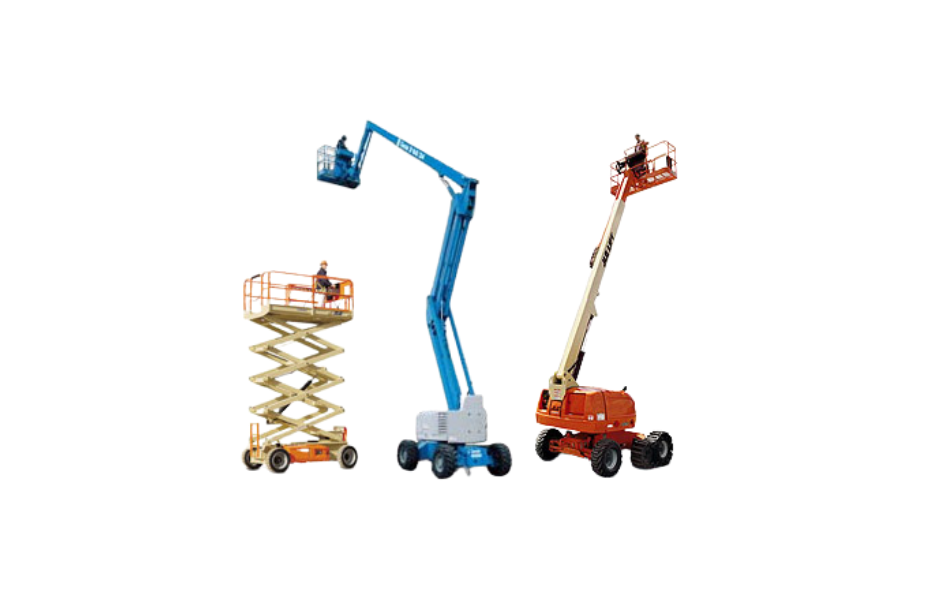
A scissor lift is an elevated work platform that raises workers and equipment vertically using a series of linked supports that extend and contract in a criss-cross pattern.
Scissor lifts are particularly useful when workers need to access an elevated area directly above the machine. Their platforms generally provide more working space than boom lifts, making them suitable for tasks that require multiple workers, tools or materials.
Common applications include:
Electrical installation and maintenance
Painting and building maintenance
Warehouse and industrial work
Ceiling and roofing work
Construction and fit-out projects
Scissor lifts are available in different platform heights and configurations, including electric scissor lifts for indoor applications and diesel scissor lifts designed for outdoor construction sites.
A boom lift uses an extendable arm, or boom, to position a work platform at height. Unlike a scissor lift, which primarily moves vertically, a boom lift can also extend horizontally and reach over or around obstacles.
This additional flexibility makes boom lifts particularly useful when the work area is difficult to access directly from underneath.
Common applications include:
Building façade maintenance
Construction and installation work
Tree maintenance and landscaping
Industrial maintenance
Working around obstacles and elevated structures
Boom lifts are available in different configurations, including straight telescopic booms and articulated boom lifts. Articulated models feature multiple sections that can bend, allowing operators to position the platform around obstacles.
Although both machines provide elevated access, there are several important differences to consider when choosing between them.
One of the biggest differences is how each machine reaches the work area.
Scissor lifts provide vertical elevation, making them ideal when the required work is directly above the machine. However, they generally offer very limited horizontal reach.
Boom lifts provide both vertical height and horizontal outreach. This allows operators to position the platform over obstacles, reach across structures and access areas that would otherwise be difficult to approach.
If your project involves reaching over buildings, machinery or other obstacles, a boom lift is often the more suitable option.
Scissor lifts typically have larger platforms, providing more room for workers, tools and materials. This makes them particularly useful for jobs where several people need to work together at height.
Boom lift platforms are generally smaller, as their design prioritises reach and manoeuvrability rather than platform space.
For straightforward maintenance, installation or construction tasks requiring additional working room, a scissor lift may be the better choice.
Boom lifts offer greater flexibility when accessing difficult work areas. Their ability to extend horizontally and, in the case of articulated models, manoeuvre around obstacles makes them suitable for complex access requirements.
Scissor lifts are generally better suited to open work areas where the machine can be positioned directly beneath the required working height.
The available working space, ground conditions and surrounding obstacles should all be considered before choosing either machine.
Electric scissor lifts are commonly used indoors because they operate quietly and produce no exhaust emissions at the point of use. They are well suited to warehouses, shopping centres and industrial facilities.
Diesel scissor lifts and many boom lifts are designed for outdoor construction and industrial environments. Rough-terrain configurations provide additional capability on uneven surfaces, although the suitability of any machine depends on its specific operating requirements.
For indoor work, an electric scissor lift or suitable electric boom lift may be preferable. For demanding outdoor applications, a diesel-powered or rough-terrain machine may be more appropriate.
The best choice depends on the type of work being carried out and the conditions of your site.
A scissor lift is generally the better option when:
The work is directly above the machine
A larger platform is required
Multiple workers need to operate together
Tools and materials need to be carried onto the platform
The work area provides sufficient access for positioning the machine
A boom lift is generally the better option when:
The work area is difficult to reach directly from underneath
Horizontal outreach is required
Obstacles need to be reached over or around
The working position changes across an elevated structure
Greater positioning flexibility is required
It’s also important to consider the required working height, platform capacity, ground conditions, available access and any restrictions around the work area.
Choosing the right access equipment helps ensure your workers can reach elevated work areas efficiently and safely. AAH offers a range of boom lifts and scissor lifts for construction, industrial maintenance and other elevated access applications.
Whether you need a compact electric scissor lift for indoor work or a boom lift with additional horizontal reach for a challenging outdoor project, AAH can help you find suitable equipment for your requirements.
Contact AAH to discuss your access equipment needs and arrange hire for your next project.
Consider the type of access your job requires. Scissor lifts are generally better for working directly overhead and provide a larger platform, while boom lifts are suitable when you need horizontal reach to access areas over or around obstacles. If you’re unsure, AAH can help you select equipment based on your working height, site conditions and access requirements.
Yes. AAH offers access equipment suitable for a range of outdoor applications. Rough-terrain scissor lifts and suitable boom lifts can be used on construction sites and other outdoor work areas. It’s important to consider ground conditions, gradients and site access when selecting a machine.
It’s helpful to know the required working height, whether you need vertical access or horizontal outreach, the number of workers using the platform and the conditions of your site. You should also advise AAH about access restrictions, ground conditions and any obstacles around the work area.
Yes. AAH can arrange equipment drop-off and pick-up as part of the hire process. Delivery requirements and timing can be discussed when organising your hire, helping ensure the machine arrives when it’s needed and can be collected when the job is complete.
Licensing requirements depend on the type of equipment and its boom configuration. In Australia, a high-risk work licence is generally required to operate a boom-type elevating work platform with a boom length of 11 metres or more. Scissor lifts and smaller boom lifts do not generally require this specific high-risk work licence, but operators still need appropriate training, competency and site-specific authorisation.
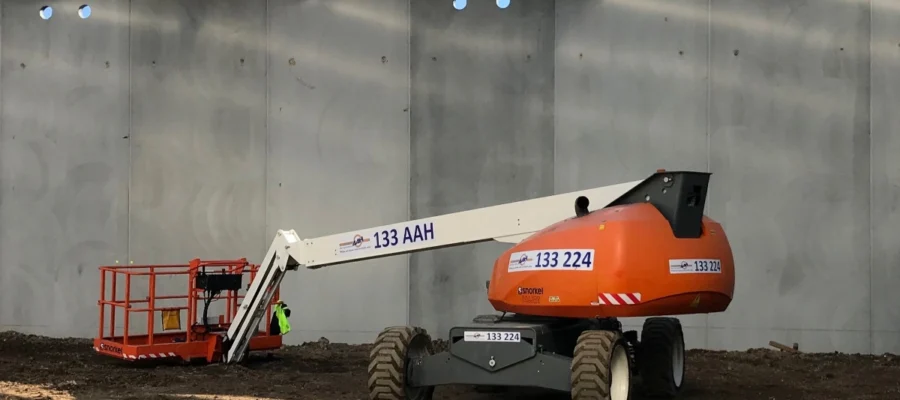

Since 2006, Australian Access Hire (AAH) has been Australia’s trusted partner for access equipment hire and rental. With branches in Sydney, Brisbane, Melbourne, and Perth, we deliver safe, reliable, and premium-brand solutions for every project.
CALL OUR TEAM
133 224